Stone has been a preferred material that has been used in construction works, be it for homes, offices, and industries because of its natural elegance and durability. Whether it is laying down marble floors, granite counter tops, sandstone walls, and slate walls, the success of the entire process will be determined by the quality of adhesive being used.
While traditional cement mortar might have been the way to go in the old days, today’s buildings require a much higher bond strength and resilience from materials used in construction. That is when stone adhesives become really valuable.
In this guide, we will explore the key facts about stone adhesives, where we will discover what benefits they have, what kinds there are, and how to choose them.
What Are Stone Adhesives?
Stone adhesives refer to special-purpose adhesive products that have been purposely made to bond natural and manufactured stones on different substrates. In contrast to traditional mortar cement, the adhesives have special polymer additives, cement, and other additives that improve bonding, flexion, and weatherability.
The adhesives work effectively under interior and exterior conditions and are able to hold heavy stone substrates without causing problems like debonding, cracking, hollow sounds, and seepages.
Why Stone Adhesives are Superior to Cement Mortar
While many constructors prefer conventional cement mortar, it is worth noting that it can cause failures in installation in the long run.
Some benefits of modern stone adhesives are:
Table of Contents
Improved Bonding Ability
Stone adhesives ensure the formation of a strong link between stones or tiles and the surface, which will minimize the possibility of loosening.
Durability
The best quality adhesives are engineered to be resistant to foot traffic, environmental factors, and structural changes for many years without losing bonding ability.
Water Resistance
There are many water-resistant stone glues available, which making them ideal for application in bathrooms, kitchens, balconies, pools, and exterior walls.
Prevention of Cracks
Thanks to their flexibility, the adhesives absorb minor structural and thermal shifts thus avoiding cracks.
Time-Saving
Ready to mix formulations facilitate installation and save labor time compared to traditional mortar.
Efficient Application
Stone adhesives allow using less material for the same area, because the adhesive layer required is smaller.
Stone Adhesive Types
Depending on the material used in the stone, appropriate adhesive types should be considered.
-
Cement Based Stone Adhesive
This is the most common type of adhesive used to adhere to natural stone.
Best Used With:
-Granite
-Marble
-Sandstone
-Limestone
-Slate
Advantages:
-Strong binding power
-Affordable
-Easily applied
-Good for walls and floors
-
Polymer-Based Stone Adhesives
Polymer-based adhesives offer increased flexibility and better adherence than regular cementitious adhesives.
Perfect for:
-Large-sized stones
-Outdoor projects
-Highly trafficked areas
-Vibration-prone areas
The benefits are:
-Enhanced flexibility
-Superior water-resistance
-Increased adhesion
-Decreased shrinkage
-
Epoxy Stone Adhesives
Adhesive epoxy stone adhesives provide excellent bonding power and chemical resistance.
Common applications are:
-Kitchens for commercial use
-Hospitals
-Factories
-Laboratories
-Rugged flooring
Important Features:
-Waterproof
-Chemically resistant
-Highly durable
-Can be used in difficult conditions
Common Uses of Stone Adhesive
Stone adhesives find use in various residential and infrastructure construction applications.
Some of the uses are as follows:
Marble Floor
Helps form a strong bond without creating any void under the marble slab.
Granite Fixing
A perfect adhesive to attach large granite slabs to the floor, counters, stairs, and wall.
Stone Wall Cladding
Ensures long-lasting attachment of stones to the building wall.
Outdoor Stone Flooring
Resists rain, sunlight, and temperature changes.
Stone Work in Bathroom
Good resistance to moisture.
Natural Stone Kitchen Counters
Forms a strong bond between the surface and stone slab.
Stairs
Supports stone stairs that come into contact with daily footfall.
Stone Adhesive Selection
Selecting the right type of adhesive is dependent on several considerations.
Type of Stone
The density and absorption rate of each stone vary and hence can require different adhesives for application.
Application Site
The installation can be either:
-Interior
-Exterior
-Wet application site
-Dry application site
-High traffic area
Adhesives required in exterior application are usually stronger and more flexible.
Size of the Stone
Large-sized stones require high-performance adhesives that can hold larger weights.
Substrate Material
Various materials can serve as substrates for the adhesion of stones and include:
-Concrete
-Cement plaster
-Previously laid tiles
-Brick walls
-Cement boards
Make sure there is compatibility between substrate and adhesive.
Environmental Conditions
Environmental conditions such as heat, moisture, cold, and weight-bearing require specific formulations of adhesives.
Stone Adhesive Installation Practices
Just like choosing the right type of adhesive is critical, so is the practice of installing it properly.
Surface Preparation
The surface needs to be:
-Clean
-Dry
-Free from dust
-Strong
-Level
It is important to clean up any loose materials and greasy patches before installation.
Mix Properly
It is essential that you always adhere to the manufacturer’s recommended water ratio.
Apply Uniformly
An appropriately sized notched trowel should be used to apply the adhesive evenly.
Back Buttering Large Stones
Large format natural stones need to have the adhesive applied to both the surface and the back of the stone.
Proper Joint Spacing
Expansion joints need to be left for proper structural movement.
Proper Curing Time
Do not tread upon the stones till the completion of the curing process.
Mistakes to Avoid
Even the expensive adhesives for stones may fail due to incorrect installation.
Watch out for these mistakes:
-Installing over dusty and uneven surfaces
-Excessive water added to the adhesive
-Expired adhesive materials
-Adhesive applied too thin or too thick
-Expansion joints overlooked
-Stepping on fresh stone installations
-Incorrect adhesive used on heavy stone installations
The quality of craftsmanship is very critical to the life span of the installations.
Maintenance Suggestions After Installation
Although stone adhesives last long, proper maintenance will ensure the beauty of natural stone is retained.
Some maintenance recommendations to follow are as follows:
-Cleaning should be done on a regular basis using cleaners safe for use on natural stone.
-Use of harsh acids should be avoided on natural stone.
-Any damages to grouting must be repaired quickly.
-Outdoor stone installations should be inspected from time to time.
-Water retention should be avoided at all costs.
Importance of Quality Stone Adhesive Bonds
Natural stone represents an excellent investment. Poor quality adhesive will result in costly repairs and replacements.
Benefits of high-quality stone adhesives include:
-Reliability
-Durability
-Less maintenance
-Aesthetic appeal
-Increased strength
-Waterproof
-Resistance to adverse weather conditions
-Greater safety during handling
The right choice of adhesive will help prevent installation problems later on.
Conclusion
Natural stone installations not only depend on the quality of stones used but also on the right choice of stone adhesives. Modern adhesive technologies provide outstanding strength, flexibility, durability, and resistance to water and environmental influences making them an excellent replacement to old-fashioned cement mortar.
Whether you are laying marble floorings, granite walls, stone façades, or even large format tiles, choosing the best stone adhesive guarantees the safety, strength, and professionalism of your work.
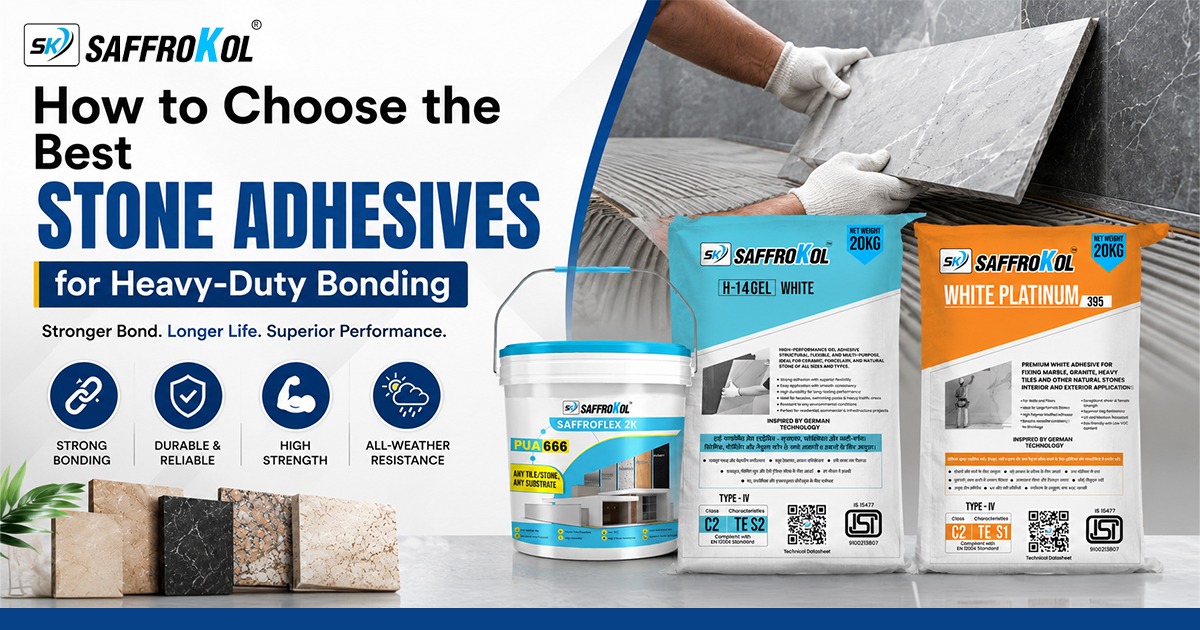
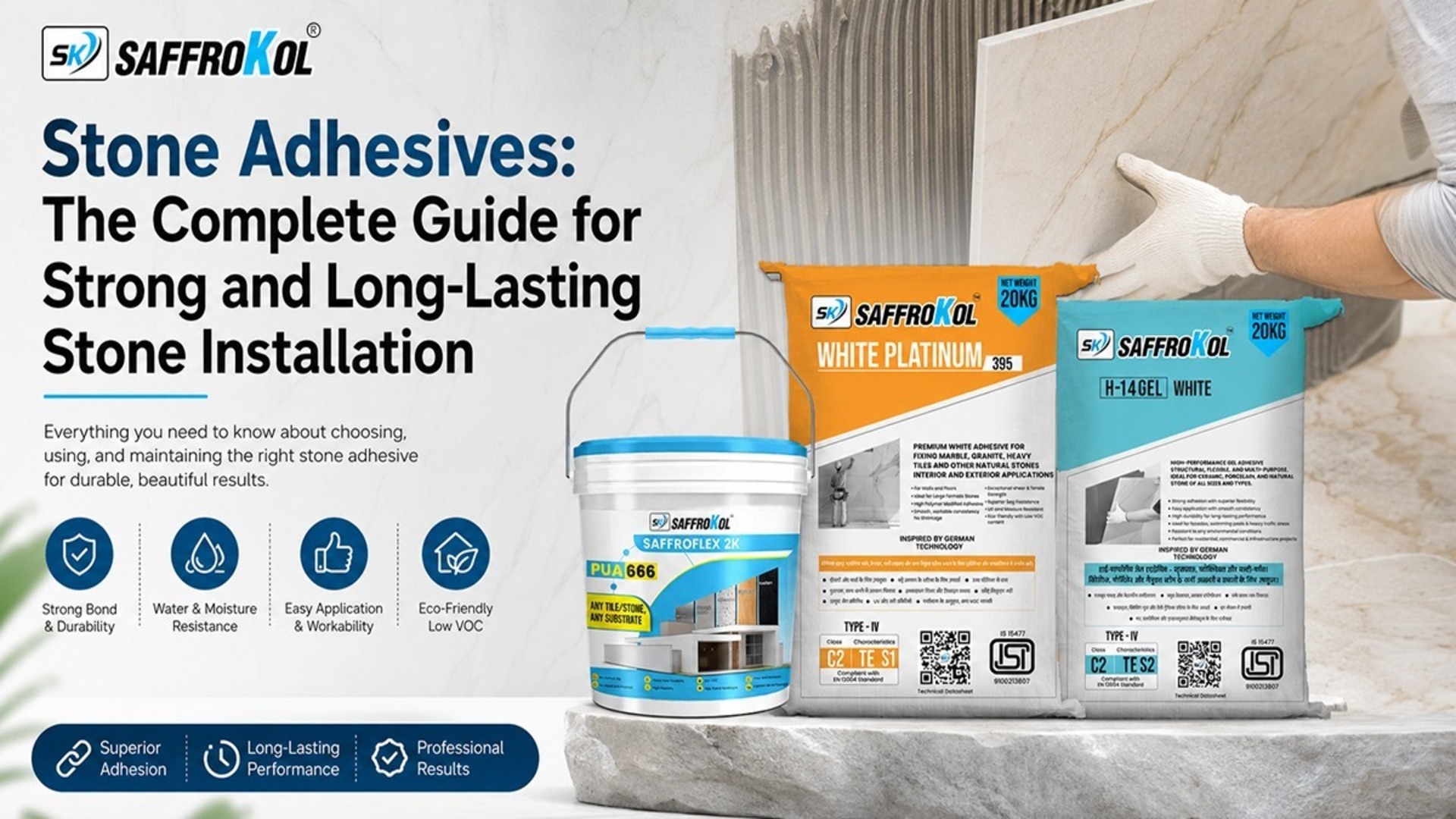
Saffrokol provides an excellent selection of the latest high-quality stone adhesives, which makes the installation easy and guarantees the strength and longevity of the results. Regardless of whether it is heavy stones or large format tiles, the products from Saffrokol can guarantee the reliable bonding.