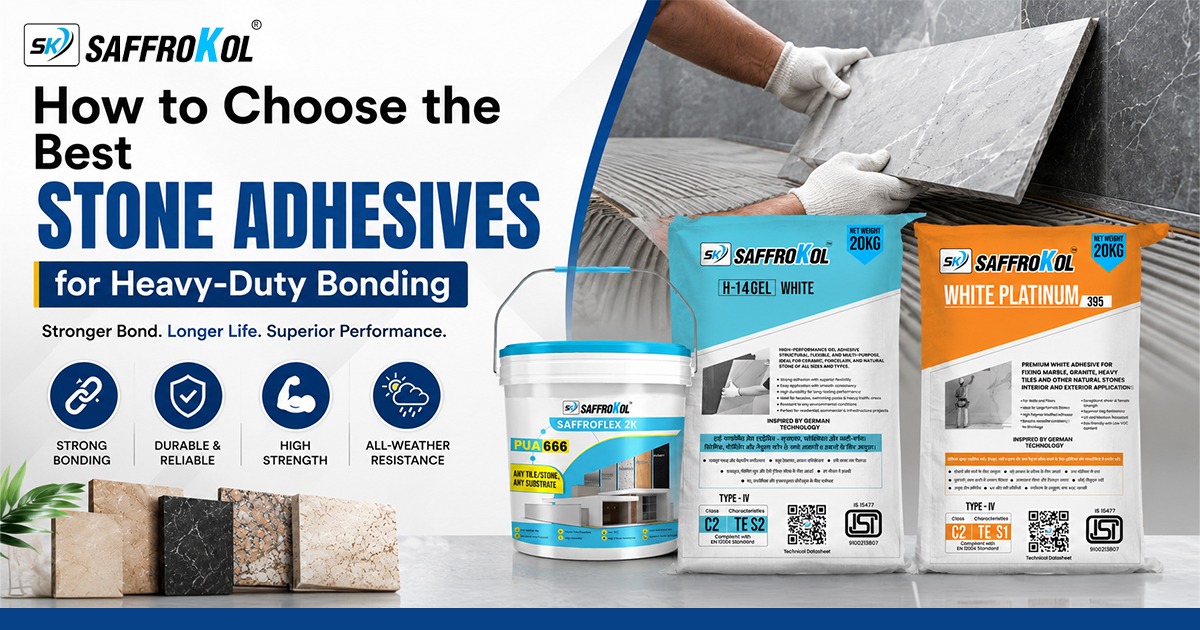
Granite, marble, sandstone, slate, quartz, and limestone are some examples of the natural stones which are commonly used in modern buildings due to their strength, beauty, and the longevity. Whatever your project is whether you are constructing a luxurious house or office buildings, landscape or industry areas, correct installation of stones is crucial to making sure they last long. The key aspect of successful installation is selection of proper stone adhesives.
Improper choice of adhesive may result in loose stones, cracks, water leakage, and costly repairing. Meanwhile, good quality stone adhesives form a robust and durable bonding capable of resisting heavy loads and harsh conditions.
In this guide, we will tell you about how to select the best stone adhesives for heavy-duty bonding and why it is worthwhile to invest in a top-of-the-line adhesive.
Why Stone Adhesives Are Better Than Traditional Cement Mortar
For many years now, the bonding of stones has been through cement-sand mortar. However, in recent times, the construction industry requires more durable and stronger bonding material.
Professionally manufactured stone bonding materials have special formulation using polymers and special bonding agents to perform better than traditional mortars.
The following are some of its benefits:
- Strong bonding
- Increased flexibility to accommodate structure movements
- Fewer chances of voids
- Increased resistance to moisture
- Resistance to cracking
- Easy application process
- Durability
These are some of the reasons why stone bonding materials are the preferred choice in building construction.
Factors to Consider When Choosing Stone Adhesives
Not all adhesives can be used on all stones or applications. It’s crucial to choose the correct adhesive considering several factors.
Table of Contents
Type of stone
Various stones possess varying properties.
For example:
- Marble needs adhesives which stain the least.
- Granite is a dense and heavy stone which requires strong bonding adhesives.
- Adhesives which are more flexible might be required in slate and sandstones.
- Quartz and engineered stones need special formulations of adhesives.
Use only those adhesives that are suitable for your type of stone.
Indoor and Outdoor Installations
Outdoors installations are subject to:
- Rain
- UV rays
- Heat
- Cold
- Temperature changes
For demanding exterior application, weather-resistant stone glue must be used to withstand the changing climatic conditions and still be effective.
Interior applications need adhesives that bond well, though moisture resistance is essential in wet areas.
Weight and Size of the Stone
Larger sized stones put more strain on the bonding layer.
Heavy stones need an adhesive that is:
- High tensile strength
- With good grab ability
- Minimum shrinkage
- Good load bearing strength
If we use normal adhesives for heavy sized stones, it will eventually lead to slippage.
Surface Compatibility
Stone adhesives should be compatible with various substrates, including:
- Concrete
- Cement plaster
- Existing tiles
- Drywall
- Metal (where applicable)
- Cement boards
Always verify substrate compatibility before installation.
Moisture Resistance
Areas like:
- Bathrooms
- Swimming pools
- Balconies
- Kitchens
- Basements
- Exterior walls
require moisture-resistant stone adhesives that prevent water infiltration and maintain bond strength over time.
Key Features of High-Quality Stone Adhesives
Select stone adhesives based on their ability to deliver:
Excellent Bonding Capability
High-quality bonding capability is a must when installing heavy stones, which should remain firmly in place for years.
Flexibility
Buildings usually expand and contract due to temperature variations. Adhesive materials should withstand such variations without cracking.
Slip Resistance
Non-slip adhesives are a good choice for wall installations where it is necessary to prevent slippage of heavy stones.
Resist Weather Effects
In exterior stone installations, the adhesives should resist rain, UV rays, and changes in temperatures without weakening its properties.
Ease of Working
Adhesive materials favored by professionals have the following characteristics:
- Mix well
- Apply easily
- Have sufficient working time
- Give great coverage
Such properties increase work efficiency and reduce labour costs.
Common Applications of Stone Adhesives
Premium stone adhesives are suitable for a wide range of applications, including:
- Marble flooring
- Granite flooring
- Stone wall cladding
- Staircases
- Kitchen countertops
- Outdoor paving
- Commercial buildings
- Hotel lobbies
- Shopping malls
- Swimming pools
- Balconies
- High-rise buildings
Due to their flexibility, they are very suitable for any type of project.
Installation Tips for Maximum Bond Strength
Even the most effective glue works best when applied right.
Here are some good practices:
Prepare the Surface
The substrate should be:
- Clean
- Dry
- Dust-free
- Structurally sound
- Level
Any loose material should be removed before installation.
Proper Mix
Always adhere to the recommended water ration by the manufacturer. Too much water and poor mixing will result in low strength of the adhesive.
Correct Notch Size Trowel
Using the correct trowel will provide the right amount of adhesive under the stone.
Apply Evenly
Even application of the adhesive prevents air pockets in the adhesive that will weaken the adhesion.
Back Butter Large Natural Stones
For large natural stones, it is advisable to apply adhesive on both the substrate and back of the stones.
Allowing the Adhesive to Cure Properly
Do not walk on a stone floor before the adhesive cures completely.
Common Errors to Be Avoided
Most errors that lead to the failure of installation of stone surfaces can be easily avoided.
Do not use:
- Using ordinary cement instead of specialised stone adhesives
- Choosing the wrong adhesive grade
- Installing on dusty or uneven surfaces
- Incorrect water mixing ratios
- Insufficient adhesive coverage
- Walking on freshly installed stone too early
- Ignoring expansion joints
This will increase the success rate of your installation.
Why Choose Saffrokol Stone Adhesives?
One must never compromise on the quality and performance when choosing a good adhesive brand.
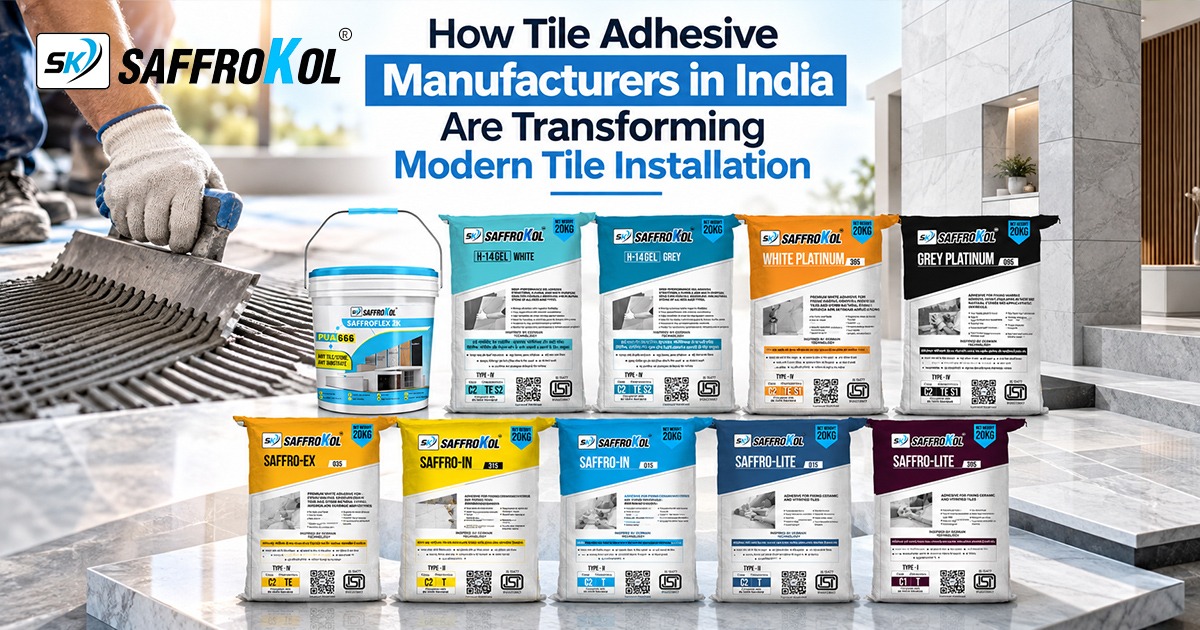
Saffrokol brings to you an extensive collection of Tiles & Stones Adhesive that caters to the modern day construction needs. Saffrokol’s range comprises polymer modified, weather resistant, high strength adhesives for heavy natural stones, along with special purpose adhesives for indoor as well as outdoor use. Based on your requirements, the products are available for ceramic tiles, vitrified tiles, marble, granite, large size tiles, natural stones, wet areas, as well as polyurethane based bond.
Saffrokol adhesives are designed to provide:
- Superior bonding strength
- Excellent flexibility
- Moisture resistance
- Crack-resistant performance
- Easy application
- Long-lasting durability
- Reliable performance for heavy-duty installations
Whether you’re a contractor, architect, builder, or a homeowner, making the right choice of adhesives helps to achieve professionally done work and also structural stability in the long run.
Conclusion
The selection of the optimal adhesives for stone is one of the key points of stone installation. Knowing the type of stone, the environment, the substrate, and the loads, each point contributes to ensuring the reliable bonding.
High quality stone adhesives ensure that besides increasing the efficiency of the installation, it will be cheaper to maintain the natural stones and that their lifetime will be prolonged. If you are interested in the best stone adhesives, visit Saffrokol and use our advanced Tiles & Stones Adhesive series.